By Raphael Edou – Former Minister of Territorial Administration of Benin, Governance Expert, Local Leader, and Committed Entrepreneur
Introduction: When the State Forgets Its Citizens
Francophone Africa still suffers from a structural legacy inherited from colonization: an administration designed to dominate, not to serve. Too often, citizens — especially those in rural or underprivileged communities — are treated with disdain by those meant to serve them. Public service is still perceived as a privilege granted from above rather than a fundamental right.
After more than 20 years of engagement at all levels — NGOs, central government, local authorities, and entrepreneurship — I am convinced that transforming public administrations is an urgent priority for the future of our states.
1. From the Ministry to Local Administration: Reconnecting the State with Reality
When I served as Minister of Decentralization and Local Governance of Benin, I traveled across all regions of the country to meet prefects, mayors, local elected officials, and deconcentrated agents around one single theme: the effectiveness of public services.
I emphasized the need to treat all citizens with dignity — regardless of their clothing, education level, religion, or political affiliation. I denounced the contempt suffered by our rural citizens, too often seen as passive subjects, when in reality they are the first actors of local resilience. I also published the transfers of funds allocated to municipalities, contributing to greater transparency and helping to restore public trust. Despite some resistance, this initiative sparked renewed citizen interest in local governance and public accountability.
2. District Head: Serving with Integrity in Adversity
After leaving the government, I accepted the position of Head of the 8th District of Cotonou, where I oversaw local actions on climate and sustainable development. This experience revealed the significant limitations of local governments in addressing essential needs.
Community Security Funded Personally
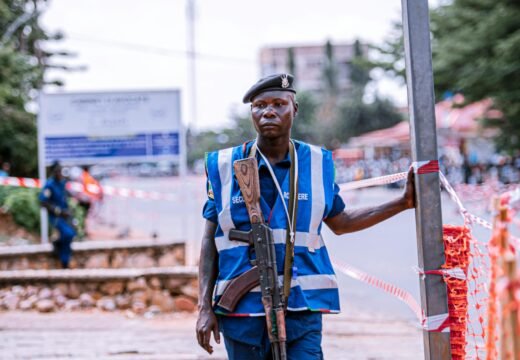
My district had neither a police station nor a gendarmerie.I personally rented a building — at my own expense (over $10,000) — to host a temporary security post.I even provided my official vehicle to the police forces.
The result: a visible law enforcement presence, strengthened collaboration with neighborhood chiefs, and a tangible reduction in the feeling of abandonment.
Stopping the Illegal Sale of Public Land
An administrative reserve — officially off-limits for sale — had been illegally subdivided after I left the ministry. As District Head, I conducted an investigation with the help of an honest city hall collaborator and the neighborhood chief of Médidrou. After winning a legal case, we successfully returned the land to public ownership.
Humanizing Civil Registry Services
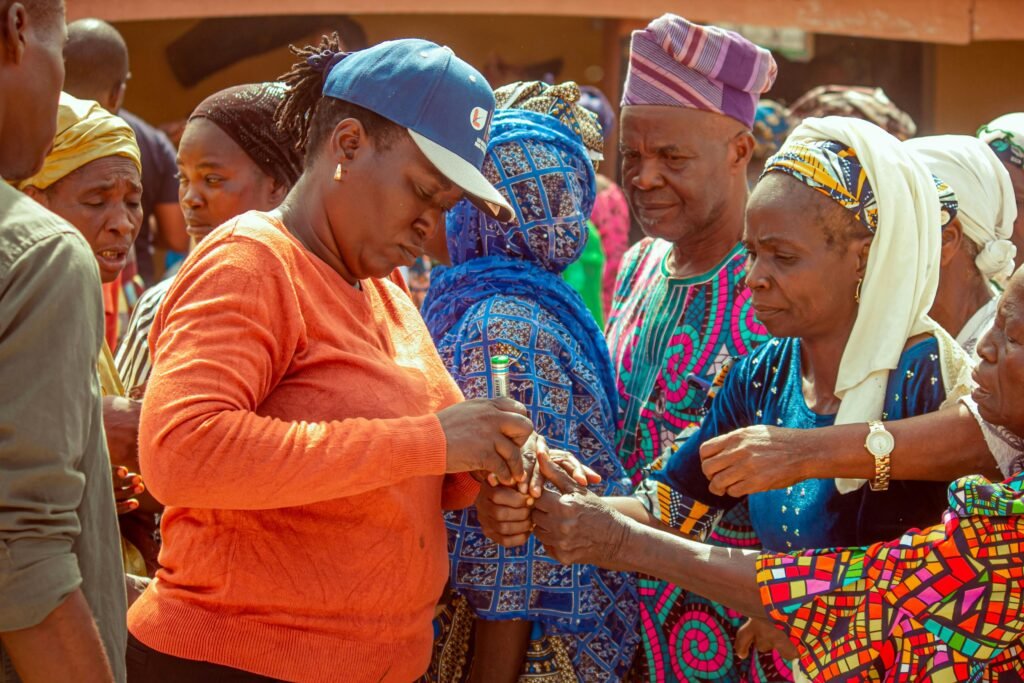
The civil registry — a cornerstone of citizenship — was suffering from severe dysfunction. Many citizens waited for hours, poorly informed, sometimes extorted. I personally left my office to speak with them and solve each case directly. This human approach helped restore dignity to a service too often corrupted by routine and indifference.
3. Rehabilitating Local Knowledge and Community Dynamics
Another African tragedy lies in our disconnection from grassroots realities. Educated in the French system, many of us inherited a superiority complex that leads us to undervalue local solutions, national languages, and traditional knowledge. This socio-cultural divide weakens both our national cohesion and our capacity for rooted innovation.
I know this from experience. Right after university, I founded a community waste management project in Cotonou, as well as a microfinance institution that is still active today. These initiatives were born from field realities — not imported models.
4. Social Innovation: Strengthening Programs through Community Expertise
My organization was selected by the Urban Development and Management Program (PGUD), financed by the World Bank, to lead the community integration component in underprivileged neighborhoods of Benin.
We introduced innovative approaches — microcredit, waste management, and local employment — which significantly enhanced the project’s impact and sustainability beyond its initial goals.
5. A Strategic Response: An International Service to Transform Public Administration
In light of these experiences, RADENAMIAS LLC is officially launching on October 15, 2025, a new International Strategic Support Service dedicated to high-ranking public officials from Francophone African countries.
Objectives of the Service:
-
Equip senior public officials to effectively defend national interests in international forums;
-
Support the transformation of administrative systems inherited from colonial models;
-
Build a network of practitioners sharing tools, strategies, and best practices in governance and management.
Key Program Components:
-
Specialized training modules;
-
Personalized executive coaching;
-
An online resource center;
-
A high-level Francophone professional network.
Conclusion: For a Sovereign Administration Reconciled with Its People
It is time to break away from administrations inherited from the colonial past and to invest in public institutions that place citizens at the heart of their mission.
We must train and empower senior officials who are both rooted in African realities and capable of acting with efficiency and dignity in international arenas.
Through this new initiative, RADENAMIAS LLC is committed to contributing to this transformation — with a pragmatic, human-centered, and impact-driven approach.
Because the administration of tomorrow must be built today — through proximity, innovation, and justice.
 English
  French